
If you want your students to understand just two things about confidence intervals, what would they be? What and what order When making up a teaching plan for anything it is important to think about whom you are teaching, what … Continue reading →

If you want your students to understand just two things about confidence intervals, what would they be? What and what order When making up a teaching plan for anything it is important to think about whom you are teaching, what … Continue reading →

Like a lot of others, I follow Andrew Gelman's blog with great interest, and today I was especially pleased to see this piece relating to a recent study on the extent to which researchers do or do not interpret confidence intervals correctly.If you've ...

We don’t like to think we are wrong One of the key ideas in statistics is that sometimes we will be wrong. When we report a 95% confidence interval, we will be wrong 5% of the time. Or in other … Continue reading →
One fascinating thing about working in the area of psychological statistics is how hard it is to move people away from reliance on bad, inefficient or otherwise problematic methods. My own view - informed to some extent by the literature, by experience...
This article from my other blog may be of interest to readers of this blog: http://seriousstats.wordpress.com/2013/04/18/using-multilevel-models-to-get-accurate-inferences-for-repeated-measures-anova-designs/

Having reblogged the 5/17/12 post on “reforming the reformers” yesterday, I thought I should reblog its follow-up: 6/2/12. Consider again our one-sided Normal test T+, with null H0: μ < μ0 vs μ >μ0 and μ0 = 0, α=.025, and σ = 1, but let n = 25. So M is statistically significant only if it exceeds .392. Suppose M (the […]

The one method that enjoys the approbation of the New Reformers is that of confidence intervals. The general recommended interpretation is essentially this: For a reasonably high choice of confidence level, say .95 or .99, values of µ within the observed interval are plausible, those outside implausible. Geoff Cumming, a leading statistical reformer in psychology, has […]

Videos are useful teaching and learning resources There is much talk about “flipped classrooms” and the wonders of Khan Academy, YouTube abounds with videos about everything…really! Even television news reports show YouTube clips. Teachers and instructors use videos in their … Continue reading →

Confidence Intervals Confidence intervals are needed because there is variation in the world. Nearly all natural, human or technological processes result in outputs which vary to a greater or lesser extent. Examples of this are people’s heights, students’ scores in … Continue reading →
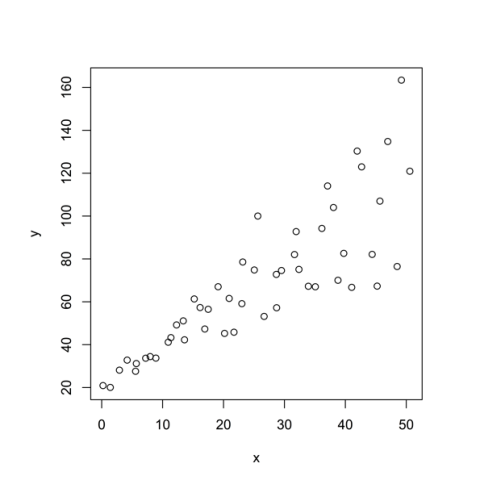
One of the main attractions of R (for me) is the ability to produce high quality graphics that look just the way you want them to. The basic plot functions are generally excellent for exploratory work and for getting to know your data. Most packages have additional functions for appropriate exploratory work or for summarizing […]
